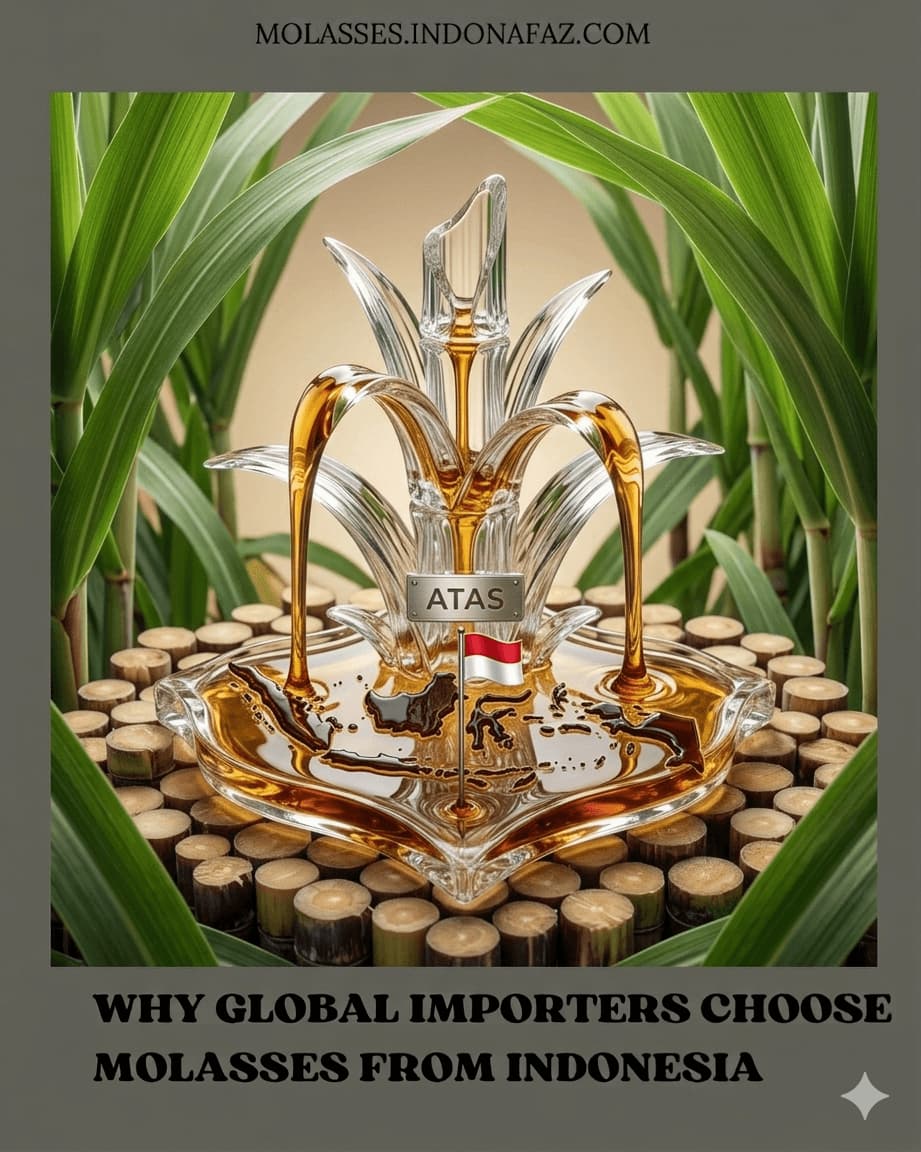
Amidst the intensifying competition in the global commodity market, Indonesian molasses has successfully captured the trust of international buyers. It is not without reason that importers from various parts of the world—ranging from Asia and the Middle East to Europe—are now shifting their focus to Indonesia as their primary source of molasses.
This decision is built upon a perfect combination of guaranteed quality, service flexibility, and the structural advantages held by the national sugar industry. Here is a detailed explanation of why Indonesian molasses is the smart choice for global importers.
1. Consistent and Guaranteed Quality
In the fermentation and animal feed industries, quality consistency is everything. Fluctuations in sugar content or purity levels can disrupt production processes and increase operational costs. Indonesia addresses this challenge by offering a product that is stable and meets global standards.
- Adhering to Global Industry Specifications: Indonesian molasses is produced with reference to internationally recognized technical parameters. We ensure that every shipment meets key specifications such as Total Sugar (48-55%), Brix levels above 85°, and purity levels free from contaminants.
- Regular Laboratory Testing: Reputable exporters in Indonesia conduct periodic laboratory testing to ensure that product quality remains consistent from one harvest season to the next.
- Product Traceability: With increasingly modern management systems, buyers can trace the origin of the product, ensuring that the molasses comes from high-quality sugarcane plantations.
2. Competitive Pricing Without Compromising Quality
One of the main attractions of Indonesian molasses is the efficient production cost structure, which translates into highly competitive pricing in the international market.
- Structural Efficiency: Indonesia benefits from an efficient cost structure, from sugarcane cultivation to the milling process. The supportive tropical climate ensures optimal land productivity.
- Greater Value for Buyers: With competitive pricing, international buyers can obtain high-quality raw materials at a more controlled cost. This provides a competitive advantage for their downstream industries, whether it be bioethanol plants, animal feed producers, or fermentation industries.
- Price Transparency: Importers can enjoy transparent and negotiable pricing schemes, especially for long-term contracts and large-volume purchases.
3. Sustainable Supply from a Strong Industrial Network
An importer's biggest concern is a disruption in the supply chain that could halt their production. Indonesia offers a solution to this concern with a robust and sustainable supply system.
- Supported by National Sugar Mills: The backbone of Indonesia's sugar industry is PT Perkebunan Nusantara (PTPN), a state-owned enterprise that manages an extensive network of plantations and sugar mills across the archipelago. With this scale of operation, PTPN and its private partners guarantee the year-round availability of molasses.
- Extended Milling Season: Thanks to its geographical location, Indonesia enjoys a longer sugarcane milling season compared to subtropical countries. Furthermore, with differing harvest zones across the islands, the supply of molasses flows almost uninterrupted throughout the year.
- Adequate Storage Capacity: Tank farm facilities strategically located near mills and ports allow for stockpiling, ensuring that sudden large-volume demands can be met immediately.
4. Shipping Flexibility for Diverse Needs
Understanding that every buyer has different logistical requirements, Indonesian exporters offer complete flexibility in shipping methods.
- Bulk Shipment: For large-scale industries with their own storage tank facilities, shipping via bulk tanker vessels is the most efficient solution. This method allows for the purchase of thousands of metric tons at a time.
- Flexibag Packaging: For buyers who need more flexibility or who do not yet have bulk tank infrastructure, the flexibag option is ideal.
- What is a Flexibag? It is a large, 20-foot dimension bag placed inside a standard dry container, capable of holding up to 24 metric tons of molasses.
- Advantages of Flexibags: They are practical, reduce the risk of leakage, simplify loading and unloading, and allow for mid-volume shipments (both Less than Container Load / LCL and Full Container Load / FCL).
- Safety Assurance: Strict filling procedures ensure the product arrives in prime condition, free from leakage or contamination during the sea voyage.
The combination of consistent quality, competitive pricing, a guaranteed supply, and shipping flexibility makes Indonesia the ideal trading partner for your molasses needs. Importers are not just buying a product; they are building a partnership with a reliable system that is oriented towards customer satisfaction.
Make the switch to Indonesian molasses and experience the difference. Contact us now to discuss your specific needs and get the best offer!